The Process
Made by Hand.
Built to Last.
We made everything you see here by hand. Not as a statement, but as a belief — that the most sustainable approach we could have was to slow down, pay attention, and make something worth keeping.
Our Journey
Everything you see here was made by hand.
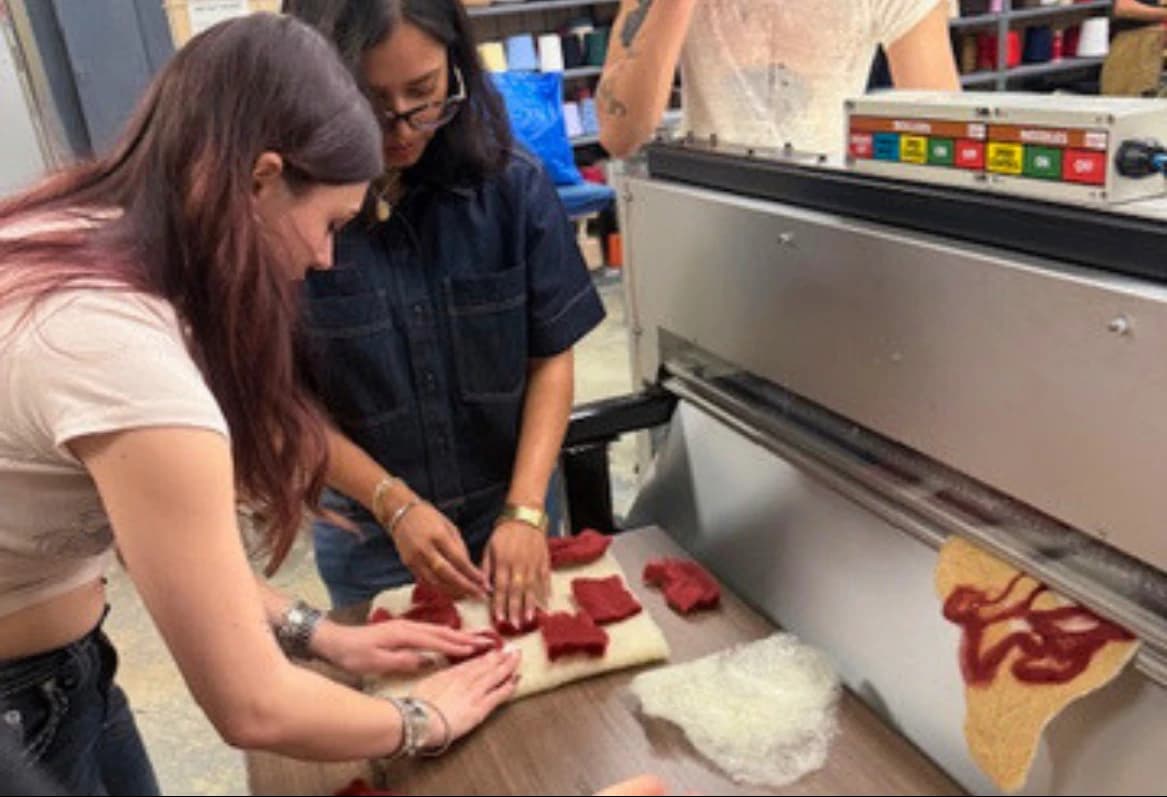
We worked on floor looms and handlooms, felted and braided, embroidered and used old craft techniques in our homage to the 70s and 80s — the decades that taught us personality could be bold, beautiful, and built to last.
Working With William
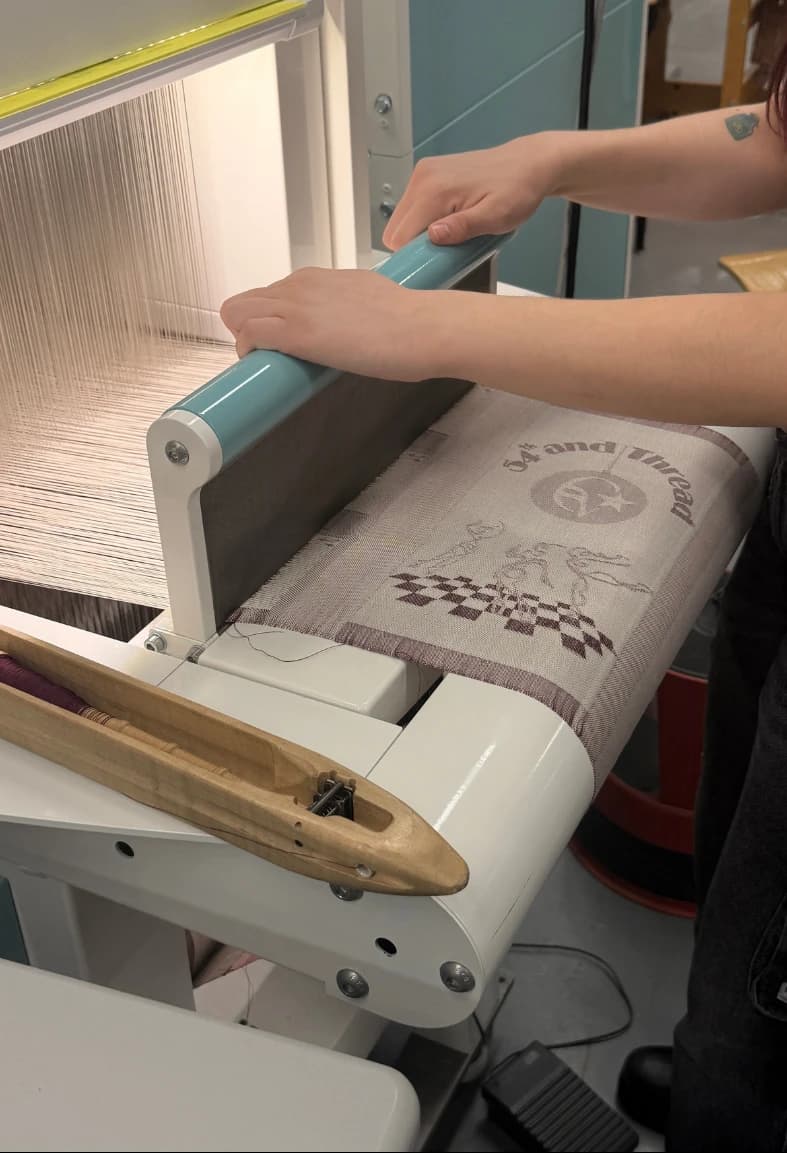
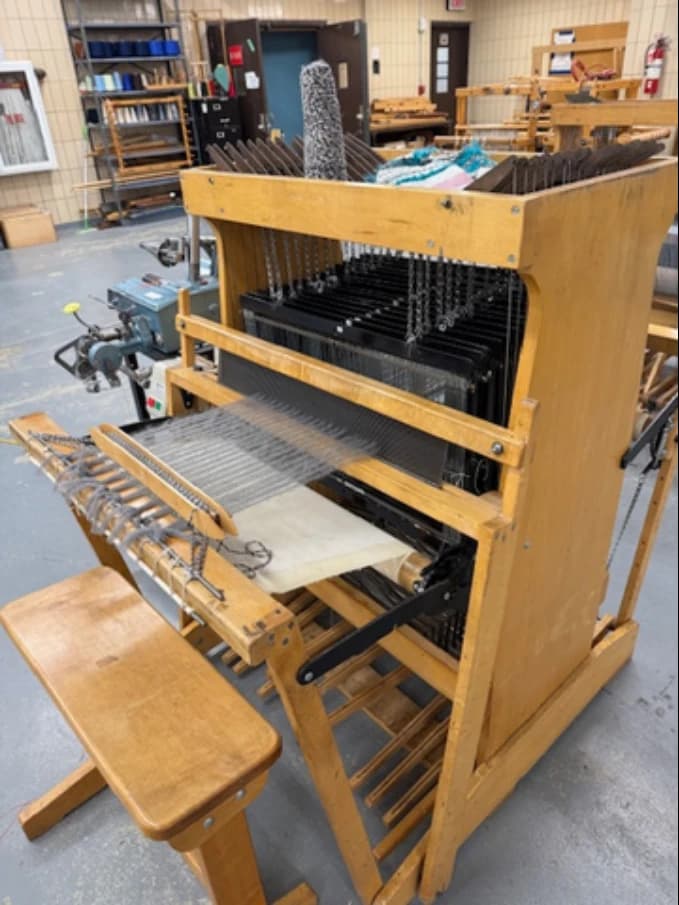
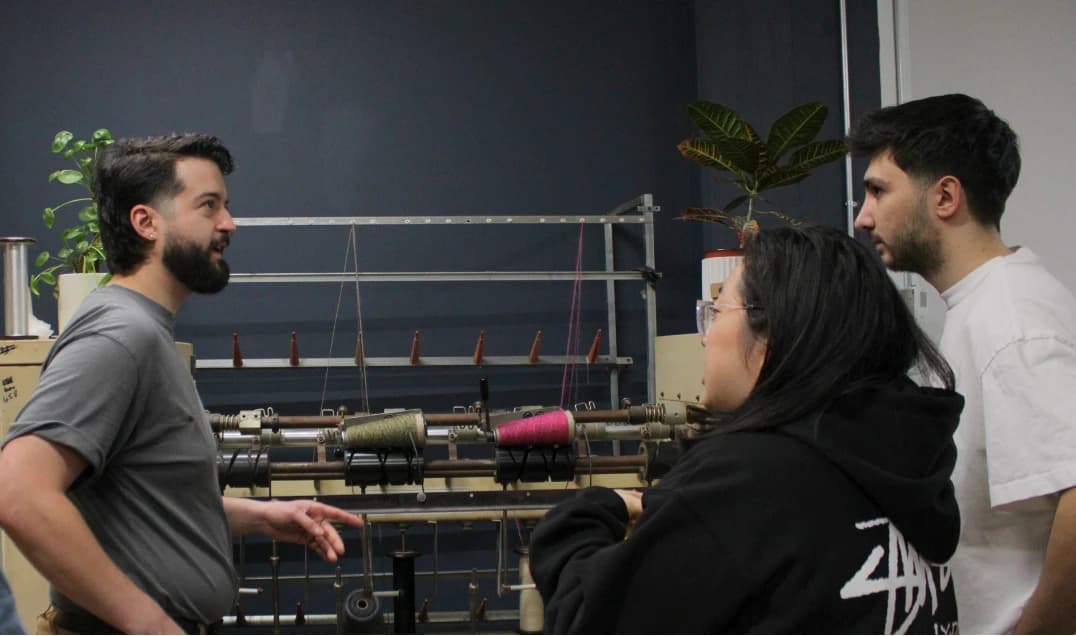
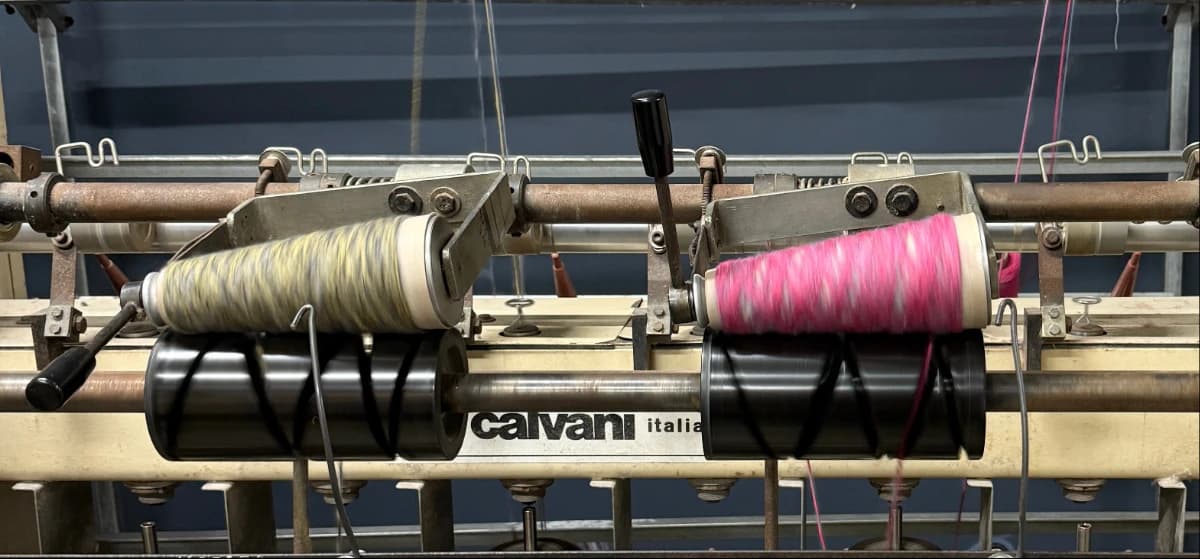
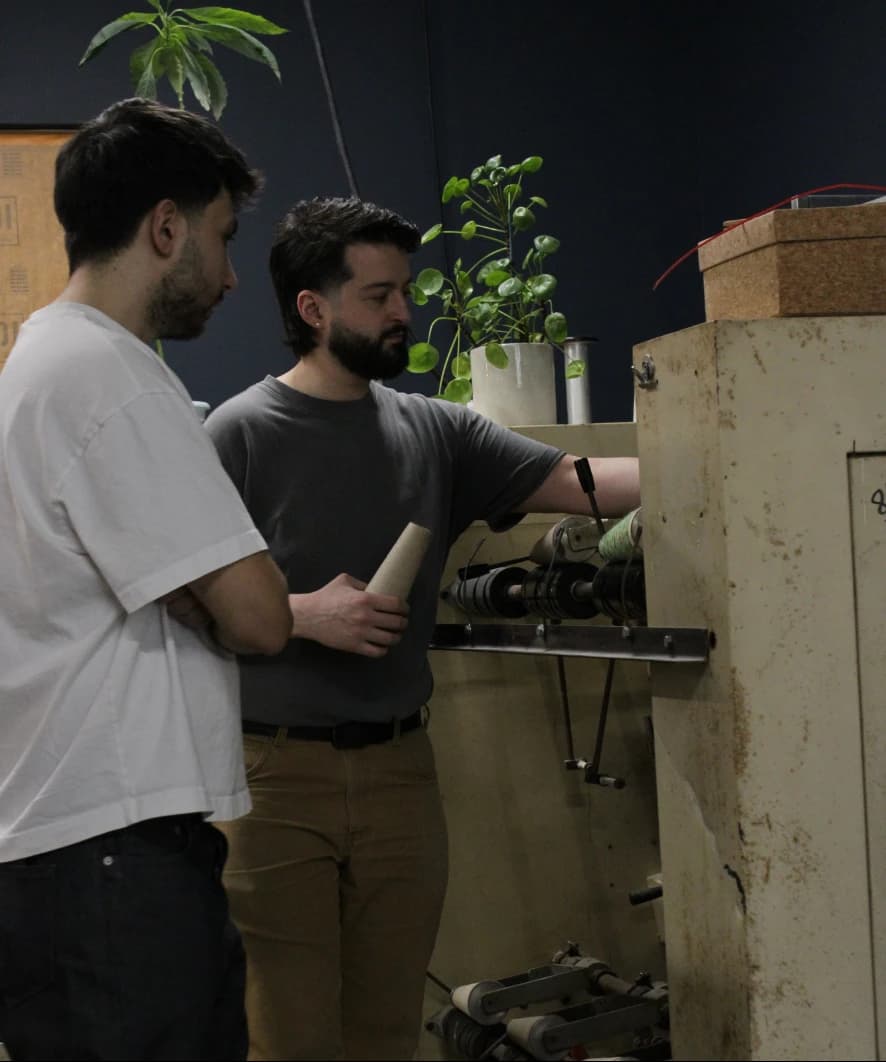
Collaborating with local artisan William Storms, we explored the technical side of weaving —using his floor loom and spinning our own yarns, his studio became our classroom, and his expertise shaped every warp and weft.
"The decades that taught us personality could be bold, beautiful, and built to last."
Every Piece Tells a Story.
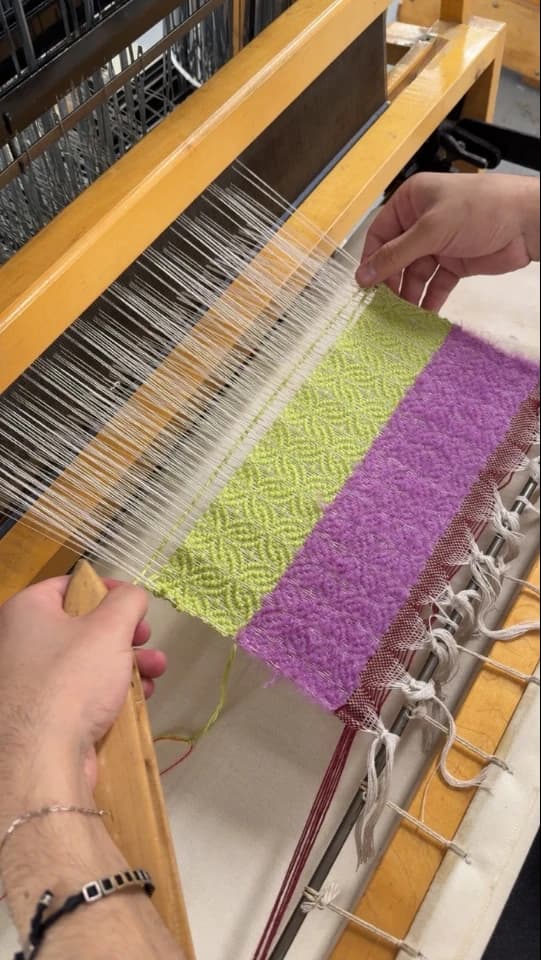
Large floor looms allowed us to weave wide, structured textiles with precision — the backbone of the tapestry rug.
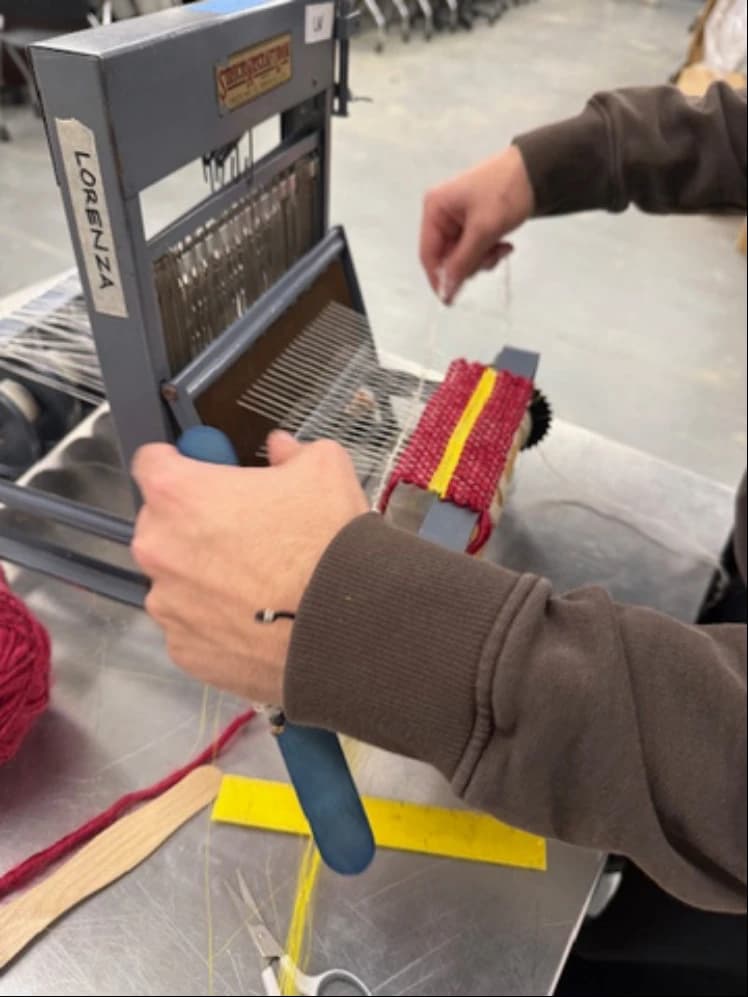
Portable handlooms gave us intimacy and control for smaller, detail-rich pieces that needed a personal touch.
Wet and needle felting transformed raw wool fibers into dense, sculptural surfaces — bold and tactile.
Braiding and knotting natural fibers created structural depth and incorporated recycled beads as embellishment.
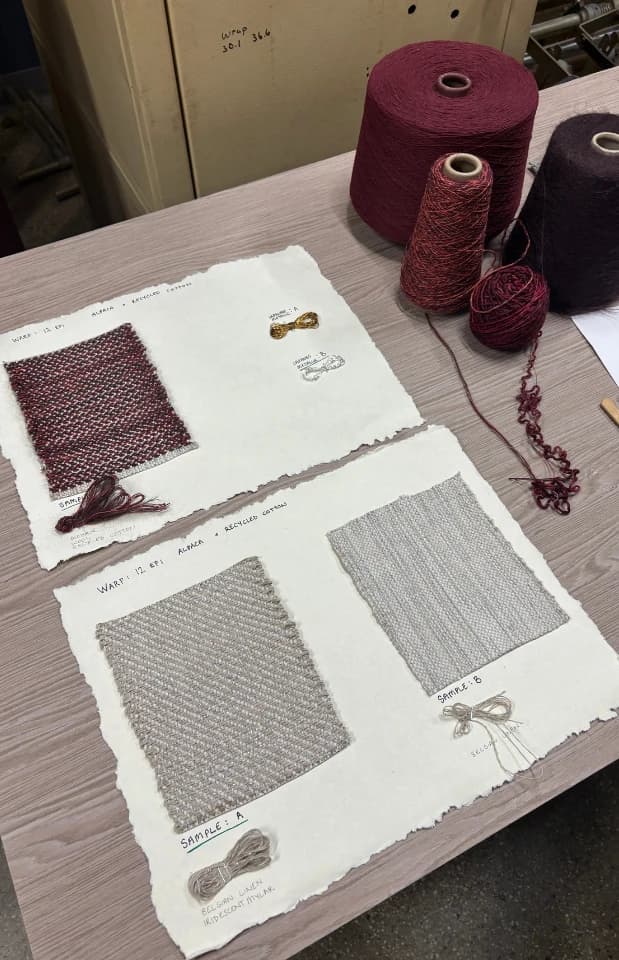
Extensive material sampling — testing warp, weft, EPI counts, and fiber blends — before the final weave.
Embroidery and archival craft methods from the 70s & 80s brought character and cultural heritage into each piece.
Color Rush
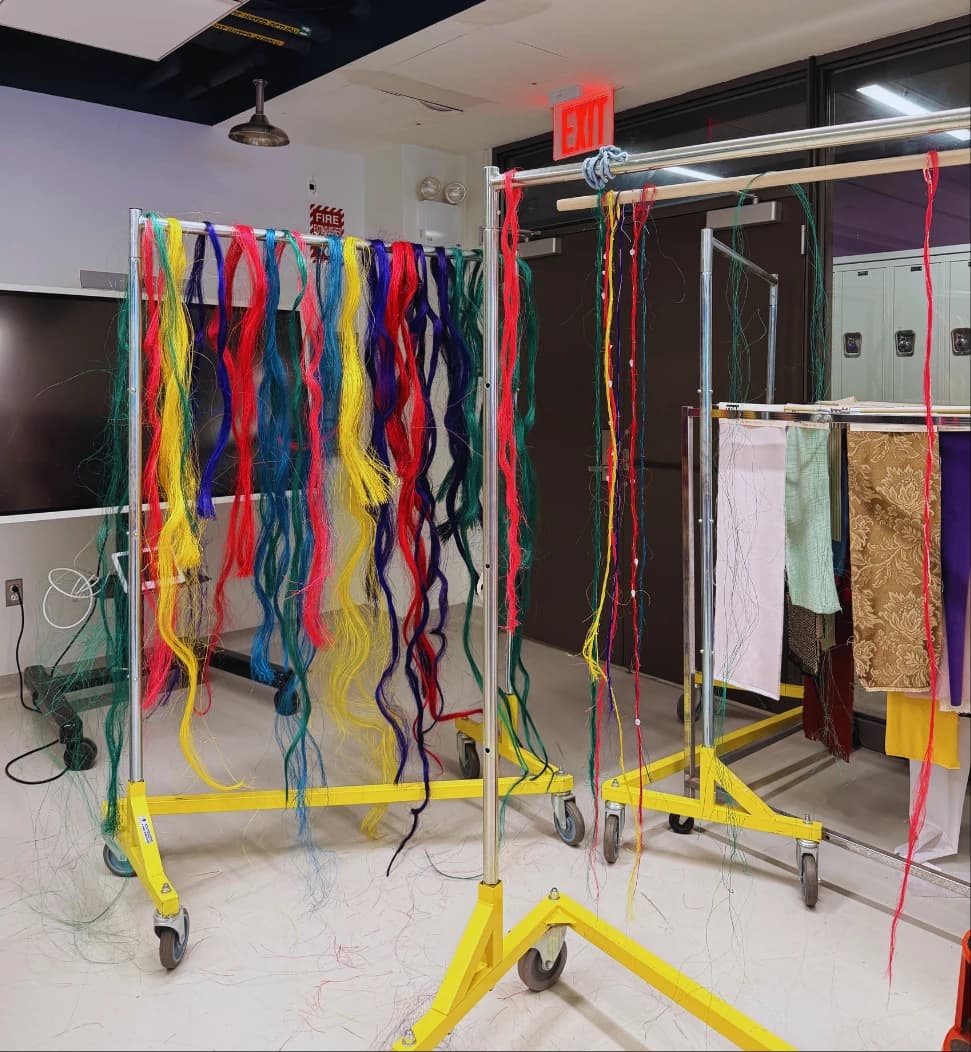
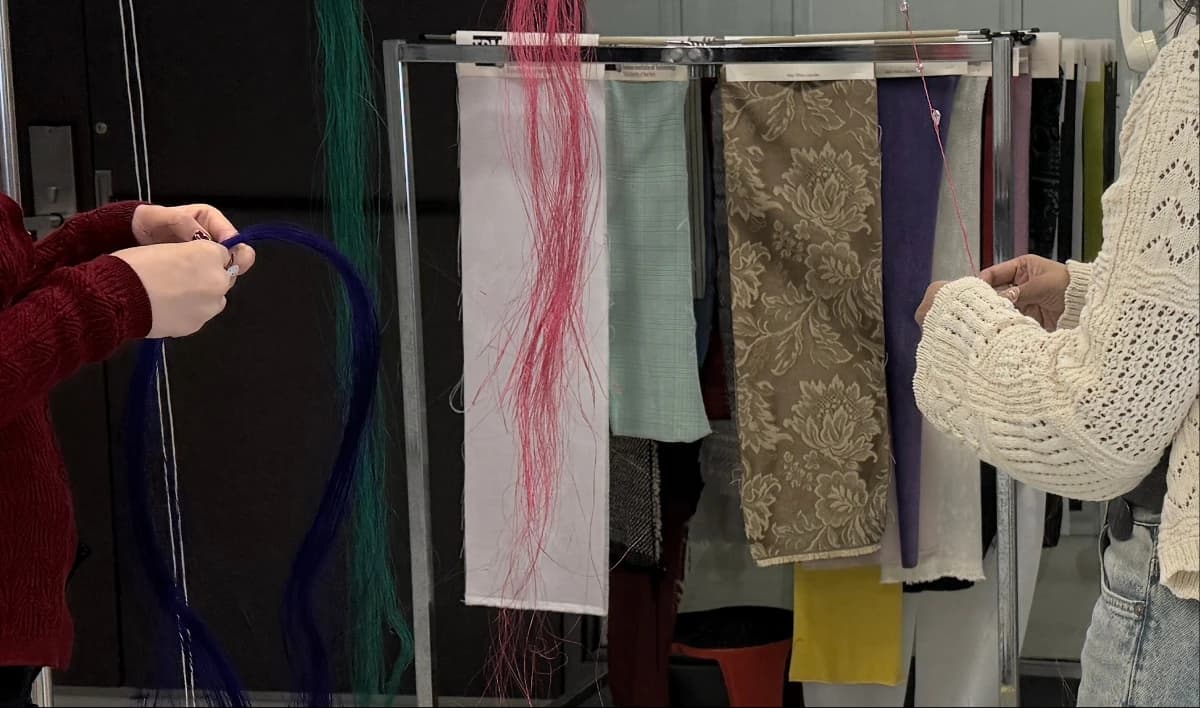
With weeks of twisting and braiding, we never gave up. We wanted to make a curtain that appreciated Abaca just the way it is. The Abaca we used had been harvested almost 2+ years before its use, so it was not as moldable as we would have preferred. But nevertheless we had to improvise and keep working with it, giving it the life it hasn't been given before.
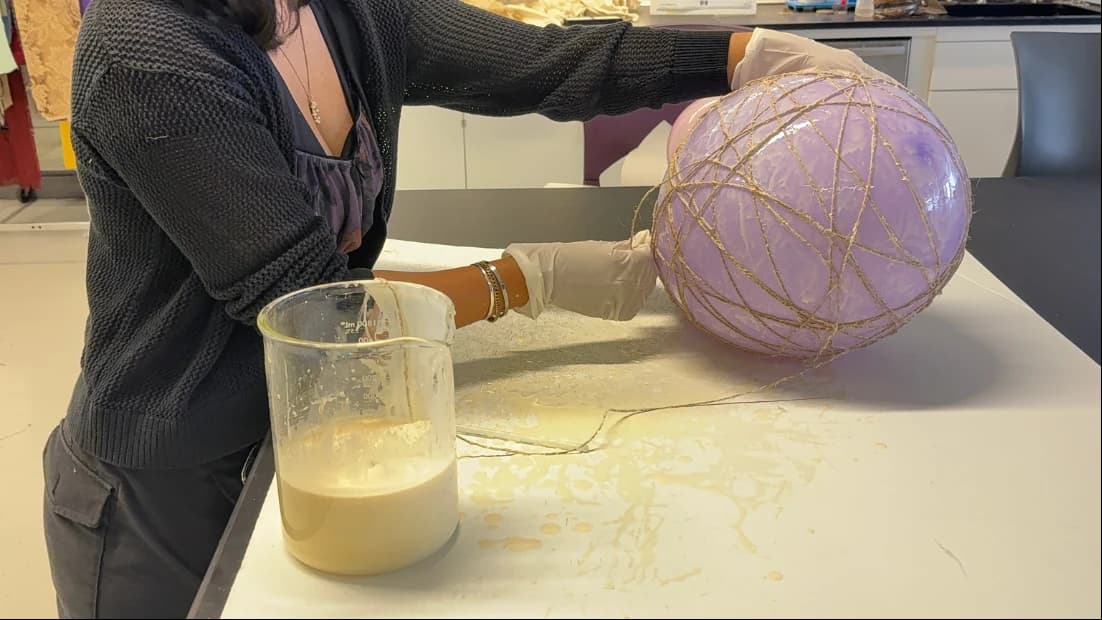
The Disco Ball Display.
Our homage to the mirror ball, the ultimate symbol of Studio 54. Handcrafted using a balloon form wrapped with jute twine and stiffened with natural starch, then finished with sustainable Abaca fiber. Three sizes. Internal lights.